Dental Anxiety: Why You're Not Alone, and What Actually Helps

If You've Been Putting Off Dental Care for Years, You're Not Alone
Maybe you moved to the Lake Norman area a few years ago and never got around to finding a new dentist. Maybe a crown started feeling different, but work, family, and everyday life kept pushing that appointment further down the list. Or maybe you've been away from dental care for years and now feel unsure about how to return without being judged for the gap.
We see this more often than you might expect. Dental anxiety can range from mild nervousness about an appointment to a strong fear connected to an earlier experience. Whatever the reason for avoiding care, returning to the dentist does not have to mean walking into an uncomfortable or judgmental environment. At White and Haines Advanced Dentistry, we take the time to understand what makes dental care difficult for you and work with you to make the experience more manageable.
Key Takeaways
- Dental anxiety can take many forms: Some people feel uneasy about dental appointments, while others have specific fears related to needles, dental instruments, sounds, or previous experiences.
- A long gap in care can make returning feel harder: The longer an appointment is postponed, the more uncertainty and worry can build around what the dentist might find or say.
- Anxiety-aware care starts with communication: Knowing what to expect, having opportunities to ask questions, and being able to pause during treatment can make the experience feel more manageable.
- Sedation is not the only way to make dental care more comfortable: A slower pace, clear explanations, breaks, and an understanding dental team can make a meaningful difference.
- Treatment can begin with a conversation: You do not need to have everything figured out before your first appointment. We can evaluate your oral health, discuss your concerns, and talk through appropriate next steps together.
Why Dental Anxiety Can Lead to Years Away From the Dentist
Dental anxiety does not look the same for everyone. Some people feel nervous as soon as they schedule an appointment. Others are comfortable with routine visits but become anxious when they need an injection, hear the sound of a handpiece, or anticipate a more involved procedure.
For some, the anxiety can be traced to a difficult dental experience earlier in life. If a previous appointment involved significant discomfort, a lack of communication, or feeling as though concerns were not taken seriously, it can affect how future dental visits feel.
Over time, avoiding the dentist can become a pattern. A person postpones an appointment because they feel anxious, the gap in care becomes longer, and the thought of eventually returning becomes even more stressful. Concerns about being judged can then become part of the problem.
We do not view that history as something you need to defend or explain away. It is simply part of understanding where you are starting and what you need from your dental team.
Why Returning to Care Can Feel So Difficult
A long gap in dental care can come with a lot of uncertainty. You may wonder whether you have cavities, whether an old restoration needs attention, or whether you will need extensive treatment. You may also worry about what the dentist will think when they learn how long it has been since your last visit. Those concerns can make it tempting to wait even longer.
One of the most useful things we can do during a first visit is replace some of that uncertainty with information. An examination and appropriate imaging can help us understand what is happening with your teeth and gums. From there, we can explain what we see and discuss which concerns need attention first.
You do not have to solve everything at once. Depending on your oral health and treatment needs, care can often be approached in stages so you understand what is being recommended and why.
What an Anxiety-Aware First Visit Can Look Like

If you have been away from dental care for years, the first appointment does not need to feel like a reckoning. We want it to be an opportunity to understand your concerns, evaluate your oral health, and establish a comfortable starting point.
That conversation begins before treatment. Letting our team know that you are anxious or that you have had a difficult dental experience in the past gives us useful information about how to approach your care.
During your visit, we can explain what we are doing before we do it and give you opportunities to ask questions. If you need a break, that can be communicated ahead of time as well.
Small details can make a meaningful difference. Knowing what to expect, understanding why something is being recommended, and feeling comfortable speaking up can help restore a sense of control during an appointment. Our goal is not to rush through the visit. It is to understand your needs and create a plan that makes sense for your oral health and your comfort.
Options for Managing Dental Anxiety
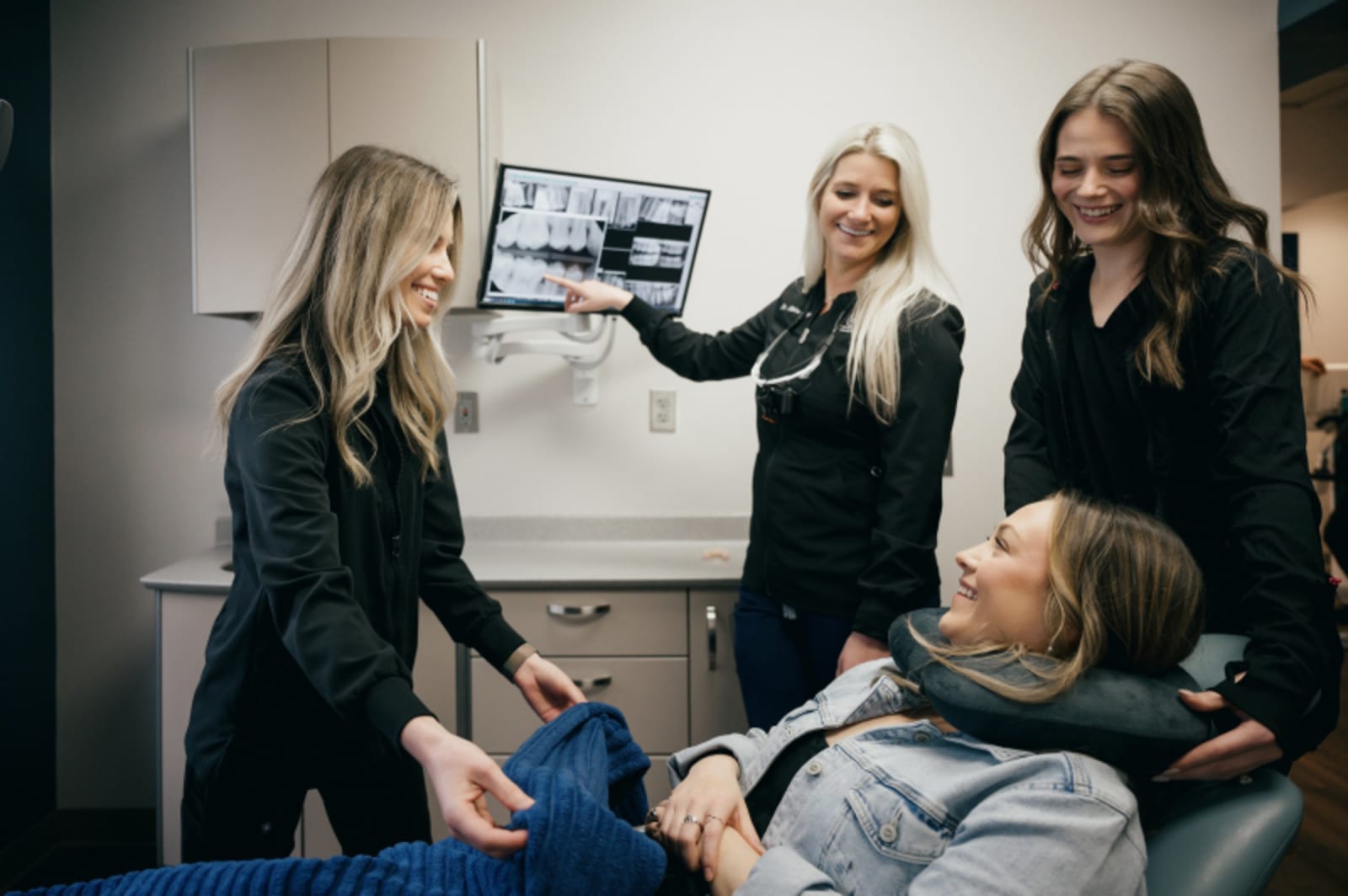
Not everyone who feels nervous at the dentist needs sedation. For some people, a slower pace, clear communication, and the ability to take breaks are enough to make an appointment feel manageable. For others, additional support may be appropriate.
Comfort Amenities
We offer a number of comfort amenities to help make your visit more relaxing, including blankets, noise-canceling headphones, and optional eyemasks.
Oral Sedation
Oral sedation uses prescribed medication taken before an appointment to help reduce anxiety. Depending on the medication and individual response, you may feel very relaxed or drowsy during treatment. Because the effects can last beyond the appointment, patients who receive oral sedation need to arrange for a driver to and from the appointment.
Sedation is not automatically appropriate for everyone. We review your health history, medications, treatment needs, and other relevant factors before recommending an approach.
What to Look for in an Anxiety-Aware Dental Practice

Sedation can be helpful, but it is only one part of a comfortable dental experience. The way a practice communicates with you matters, too.
When you are considering a new dentist after a long gap, pay attention to how your concerns are handled from the first phone call. You should feel comfortable explaining that you are anxious without having to justify why.
During your appointment, you should have opportunities to ask questions and understand what is being recommended. Your dentist should also be willing to discuss alternatives, explain the purpose of treatment, and establish how you can communicate if you need a pause. For us, these are not special accommodations reserved for people with severe dental anxiety. They are part of providing thoughtful, respectful care.
You Do Not Have to Fix Everything at Once
If you have been away from the dentist for several years, it can be easy to imagine that returning means immediately addressing everything that may have changed. That is not necessarily how your care needs to proceed.
Our first priority is understanding your current oral health and your concerns. Once we have that information, we can talk through what we find and determine which needs are most important to address.
Some people may need only routine preventive care. Others may have an older restoration that needs attention, a tooth that has become symptomatic, or several concerns that need to be addressed over time. The appropriate approach depends on what we find during your evaluation. You do not need to know the answer before you make the appointment. That is part of what we are here to help you figure out.
When You're Ready to Return to Dental Care
If you have been putting off dental care because you are anxious, embarrassed about the gap, or simply unsure where to start, you do not have to wait until you feel completely comfortable to reach out.
At White and Haines Advanced Dentistry in Cornelius, we understand that returning to dental care can take a real first step. We will listen to your concerns, evaluate your oral health, and explain your options without judgment.
When you are ready to schedule an appointment, call us at (704) 896-9535. You can start with a conversation and take the next step from there.
Connect With Us!
We look forward to meeting you.
Call 704-896-9535 or request an appointment online to set up your first visit. We’ll be in touch soon.
